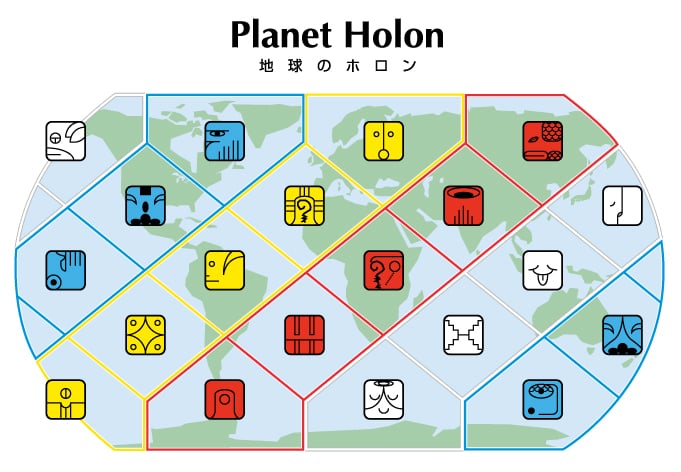
Every zone of the
Planet Holon holds equal psychic importance, regardless of population,
visibility, or surface activity. What appears remote or uninhabited in
third-dimensional terms may be central in fourth- and
fifth-dimensional function.
惑星(地球)のホロンのすべてのゾーンは、人口・知名度・地表の活動に関わらず、
等しく霊的な重要性を持ちます。 三次元的観点では遠く離れ、あるいは無人に見える場所であっても、
四次元・五次元的機能においては中心的な役割を担うことがあります。
Worldbridger
Zone: Japan and the Polarity of Power
世界の橋渡しのゾーン:日本と力の極性
How
old are you dear moon?
The
answer given is “thirteen: seven.”
—Japanese Zen koan
お月さんいくつ?
答えは「十三七つ」
―
日本の禅の公案
(訳注:日本のわらべうたであり、禅僧・仙涯が画賛に引用した例はあるものの、
この歌自体が禅の公案に由来するという根拠は確認されていない。)
The Worldbridger
Zone spans the North Pacific and centers
on Japan. It is a region where highly refined
spiritual order developed alongside profound technological
catastrophe.
世界の橋渡しのゾーンは北太平洋に広がり、 日本を中心に
位置します。 ここは、高度に洗練された霊的秩序が、深刻な技術的惨禍と並走しながら発展した地域です。
Here, disciplined
cultural forms emerged within a landscape shaped by earthquakes,
volcanic upheaval, war, and atomic destruction. This convergence
reveals a defining polarity: the human capacity to align with
sacred order, and the equal capacity to destroy it.
規律ある文化的形態が、地震・火山活動・戦争・原子爆弾による破壊という
苦難によって形成された風土の中から生まれました。 この収束が示す根本的な極性とは――聖なる秩序と調和する人間の能力と、
それを破壊する同等の能力です。
Japan sits on the Pacific
Ring of Fire at the meeting point of major tectonic plates.
Life in this zone requires discipline and constant awareness of
impermanence. Nothing is guaranteed to remain.
日本は太平洋火山帯の上、複数の主要プレートの接合点に位置します。
このゾーンで生きるには、規律と無常を常に意識することが求められます。 永続することは何一つ保証されていないのです。
Out of this geological
instability rises Mount Fuji, almost geometrically
perfect. Long regarded as a sacred axis, Fuji represents the emergence
of purity and spiritual ascent.
この地質学的不安定性の中に富士山が、幾何学的にほぼ完璧な姿でそびえます。
長らく聖なる軸として崇められてきた富士は、清らかさの顕現と霊的上昇を象徴します。
In Shinto
cosmology, the islands of Japan are formed when the divine pair Izanagi
and Izanami stir the primordial sea from the Heavenly
Bridge. After Izanami descends into the underworld, Izanagi’s act of
purification gives birth to Amaterasu, the sun
goddess, and the primary kami. Order follows purification.
Light follows restoration. Within Shinto, spirit is
not separate from the world but present within mountains, rivers,
stones, ancestors, and seasonal rhythms.
神道の宇宙論では、日本の島々は神聖な夫婦イザナギとイザナミが
天の浮橋から原初の海をかき混ぜることによって生まれました。 イザナミが黄泉の国へ降った後、イザナギの禊ぎからアマテラス
――太陽の女神にして第一の神(かみ)――が生まれます。 秩序は浄化の後に来ます。光は回復の後に来るのです。 神道に
おいて、霊は世界と別個に存在するのではなく、 山・川・石・祖霊・季節のリズムの中に宿っています。
Zen Buddhism
later refined this orientation through discipline and direct
experience. Dōgen, founder of the Sōtō Zen school, taught that
enlightenment is not a distant goal but the full expression of this
moment.
後に禅宗が、修行と直接体験を通じてこの方向性をさらに研ぎ澄まします。
曹洞宗の開祖・道元は、悟りとは遠い彼方の目標ではなく、この瞬間の完全な表現であると説きました。
Beyond the historical
record, certain esoteric traditions expand this memory further.
Traditions linked to the Takenouchi lineages
describe Japan as a keeper of very old knowledge— remnants of earlier
planetary civilizations and cosmic cycles. These teachings speak of seven
generations or root phases of humanity. In Shinto, this
continuity lives through the recognition of kami— living
presences embedded in the natural and ancestral world.
歴史的記録を超えて、特定の秘教的伝統はこの記憶をさらに遡ります。 竹内系統の伝統
は、日本を非常に古い知識の守護者――かつての惑星文明と宇宙的サイクルの痕跡――として描きます。 これらの教えは、人類の七世代あるい
は根の段階について語ります。 神道においては、この連続性は神(かみ)の認識を通じて生きています
――自然界と祖霊の世界に宿る生きた存在として。
Across Japanese
culture, this disciplined refinement found expression in tea ceremony,
calligraphy, martial arts, flower arranging, and architecture. Each
practice encodes proportion, timing, restraint, and presence. Together
they form one of the most sophisticated integrations of aesthetics,
ritual, and daily life in human history.
日本文化全体を通じて、この規律ある洗練は茶道・書道・武道・華道・建築に表現されてきました。
各々の修行は、調和・間合い・抑制・今ここにあることを体現します。
それらが一体となって、美学・儀式・日常生活の統合として人類史上最も洗練されたものの一つを形成しています。
Yet the same capacity
for order that produces spiritual refinement can also intensify
technological power.
しかし、霊的洗練を生むその同じ能力が、技術的な力をも強化しうるのです。
During the Meiji
Restoration, Japan adopted the Gregorian calendar
in 1873, aligning itself with Western systems of trade,
government, and technology after centuries of relative isolation.
Discipline and hierarchy were redirected toward industrial and
military expansion.
明治維新の時代、日本は 1873 年にグレゴリオ暦を採用し、
数世紀の相対的鎖国の後、 西洋の貿易・統治・技術のシステムに自らを同調させました。 規律と階層制は、産業的・軍事的拡張へと向け替えられました。
Martian Replay
火星の再演
Rapid modernization
transformed the country into an industrial and military power,
culminating in its defeat during the Second World War and the atomic
bombings of Hiroshima and Nagasaki in 1945. These events
marked the moment when humanity demonstrated the capacity for
instantaneous, large-scale annihilation.
急速な近代化は日本を産業・軍事大国へと変容させ、 第二次世界大戦での敗北と1945年の 広
島・長崎への原子爆弾投下に至って頂点に達しました。 これらの出来事は、人類が瞬時の大規模殲滅の能力を実証した瞬間を刻んだのです。
In the Planet holon,
Worldbridger Zone is linked to the galactic/karmic Memory of Mars.
Hiroshima and Nagasaki represent that archetype—the culmination of a
civilization organized around technical mastery, yet disconnected from
empathy and the living whole.
惑星のホロンにおいて、世界の橋渡しのゾーンは銀河のカルマ的な火星の記憶と
結びついています。 広島と長崎はそのアーキタイプを体現します ――
技術的熟達を中心に組織されながら、共感と生きている全体性から切り離された文明の極致として。
Early mappers of Mars
named one area Lemuria and another Atlantis. José Argüelles perceived
the atomic bombings as reminders of the destruction of Mars— a kind of
Martian replay and warning.
初期の火星地図製作者たちはある地域をレムリア、別の地域をアトランティスと命名しました。
ホゼ・アグエイアスは原子爆弾投下を、火星の破壊の想起――一種の火星の再演と警告――として認識しました。
After the war, Japan
rebuilt with extraordinary speed, becoming one of the most
technologically advanced societies on Earth—an ascent reminiscent of
legendary Atlantis. Today, humanity again channels vast resources
toward technological expansion, reaching toward Mars while
constructing planetary-scale artificial intelligence. If the mentality
that produced Hiroshima extends into space, the pattern repeats.
戦後、日本は驚異的な速度で再建し、地球上で最も技術的に進んだ社会の一つとなりました――
伝説のアトランティスを想起させる発展です。
今日、人類は再び膨大な資源を技術的拡張へと注ぎ込み、惑星規模の人工知能を構築しながら火星へと手を伸ばしています。
広島を生んだ精神性が宇宙へと延長されるならば、パターンは繰り返します。
Yet the Worldbridger
Zone also carries renewal.
しかし、世界の橋渡しのゾーンは、再生を担ってもいます。
Rinri Project / Rainbow Bridge
倫理プロジェクト/虹の橋
Within weeks of
Japan's surrender, Toshio Maruyama and his wife walked through the
ruins of Hiroshima asking not who was to blame, but how such
devastation became possible. Maruyama concluded that humanity had lost
its ethical alignment with natural law.
日本の降伏から数週間のうちに、丸山敏雄とその妻は広島の廃墟を歩き、
誰を責めるかではなく、いかにしてこのような惨禍が起こりえたのかを問い続けました。
丸山は、人類が自然の法則との倫理的な調和を失ったからだと結論づけました。
He founded the Rinri
Institute of Ethical Enlightenment on September 3, 1945, Kin 83. Rinri
means ethical awakening—a restoration of inner order expressed through
daily conduct, gratitude, and responsibility.
彼は 1945 年 9 月 3日(キン 83)に倫理研究所を創設しました。
「倫理」とは倫理的覚醒――内なる秩序を日常的行為・感謝・責任を通じて回復することを意味します。
In 1996, José
Argüelles presented at the Rinri headquarters in Tokyo, noting the
resonance between the Thirteen Moon calendar and the Rinri teachings.
Both aimed to restore intrinsic ethical awareness through realignment
with the cycles of nature. This meeting laid the foundation for the
Rinri Project, conceived as a karmic counterpoint to the Manhattan
Project.
1996 年、ホゼ・アグエイアスは東京の倫理研究所本部で講演し、
13の月の暦と倫理の教えとの共鳴を指摘しました。 双方とも、自然のサイクルへの再調和を通じて内在的な倫理的覚醒を回復することを目指していました。
この出会いが、マンハッタン計画へのカルマ的な対極として構想された倫理プロジェクトの基盤を築きました。
While the Manhattan
Project initiated the nuclear age in July 1945, the Rinri Project,
launched on July 26, 1996: Kin 199, proposed a global telepathic
experiment: the creation of a circumpolar rainbow bridge. Its
hypothesis was simple: once the human mind was freed from artificial
time, it could focus collectively on harmony with natural forces,
supporting the biosphere–noosphere transition.
マンハッタン計画が 1945 年 7 月に核の時代を開始したのに対して、 倫理プロジェクトは
1996年 7 月 26 日(キン 199)に開始され、 地球規模のテレパシー実験――極をとりまく虹の橋の創造――を提唱しました。
その仮説はシンプルでした: 人間の精神が人工的な時間から解放されれば、
自然の力との調和に集合的に焦点を当て、バイオスフィア(生物圏)からヌースフィア(精神圏) への移行の支援につながるというものです。
At its core, the Rinri
Project was conceived as a “rainbow science” experiment— the
telepathic engagement of the psi bank by a critical mass to hasten
planetary awakening. The atomic bomb began in the imagination; so too
could the rainbow bridge around the Earth. It was described as the
imagination of the mind of peace, aligned with the synchronic order
and the Law of Time.
その核心において、倫理プロジェクトは「虹の科学」実験として――
臨界質量の人々によるサイバンクへのテレパシー的な関与によって、 惑星の覚醒を促進するものとして構想されました。
原子爆弾が想像力の中から始まったように、 地球をとりまく虹の橋もそこから始まりうるのです。
それは、共時性秩序と時間の法則に調和した、平和のマインドの想像力として描かれました。
Mysterious Stones, Whales and Water
神秘の石、鯨と水
Japan is home to
unusual ancient structures, including the megalith Ishi-no-Hoden in
Takasago. Carved from a single mass of stone weighing hundreds of
tons, it appears partially separated from the bedrock, as though
suspended. Its purpose remains unknown.
日本は特異な古代遺構が多
くあり、 その中に石の宝殿(高砂市)があります。 数百トンにも及ぶ単一の岩塊から彫り出されたそれは、
あたかも宙に浮いているかのように岩盤から部分的に切り離されているように見えます。 その目的は今も不明のままなのです。
Within the Takenouchi
narratives, the stone is remembered in connection with earlier
world cycles and knowledge preserved from prior epochs. Whether read
symbolically or literally, Ishi-no-Hoden stands as a reminder of other
times and worlds. It is associated with a nearby Shinto shrine
dedicated to Okuninushi, deity of land formation and hidden realms.
竹内の伝承において、この石は以前の世界のサイクルと先代の時代から保存された
知識に関連して記憶されています。 象徴的に読むにせよ文字通りに読むにせよ、石の宝殿は他の時代・他の世界への想起として立っているのです。
近くの大国主――大地形成と隠れた領域の神――を祀る神社と関連付けられています。
The question remains:
which intelligence will guide the future—the one that destroys, or
the one that listens, remembers, and moves in harmony with the
whole?
問いは残ります:未来を導くのはどちらの知性か――破壊するものか、
それとも聴き、記憶し、全体と調和して動くものか。
Japan also lies just
below the Maldekian Serpent Zone of influence. Memories of a
destroyed world circulate into the region. Echoes of that catastrophe
circulate through the area, surfacing in the collective imagination.
These subconscious impressions can be seen reflected in Japan's
thriving manga and pop subculture, where themes of planetary
catastrophe, mutation, advanced technology, and otherworldly realms
appear again and again.
日本はまたマルデクの蛇のゾーンの影響圏のすぐ南に位置します。
破壊された世界の記憶がその地域に流れ込みます。 その惨禍のこだまが領域を循環し、集合的想像力の中に浮上します。
これらの潜在意識的な印象は、日本の活況するマンガとポップサブカルチャーの中に見て取ることができます
――そこでは惑星的惨禍・変異・高度な技術・異界のテーマが 繰り返し登場します。
The surrounding seas
mirror this polarity. Long known for powerful currents and underwater
volcanic activity, parts of the region were mythologized as the
“Devil’s Sea,” associated with disappearances and magnetic anomalies.
Legends of lost civilizations and instability took root here. This
area is also called the Dragons triangle and is linked to the
Bermuda triangle.
周辺の海域もこの極性を映し出します。
強力な海流と海底火山活動で長く知られるこの地域の一部は「魔の海」として神話化され、 失踪や磁気異常と結びつけられてきました。
失われた文明と不安定性の伝説がここに根を張りました。 この地域はまた龍の三角地帯とも呼ばれ、バミューダ・トライアングルと関連付けら
れています。
Yet these waters also
trace ancient migratory routes of whales and dolphins—beings whose
intelligence moves through song, shared memory, and coordinated
passage across vast distances. Linked to Sirius, they are understood
as living keepers of oceanic memory, carrying patterns of harmony that
long predate human civilization. And still, whales are hunted!
しかしこれらの水域はまた、鯨とイルカの古代の回遊路をたどってもいます――
その知性が歌・共有された記憶・広大な距離にわたる協調した移動を通じて動く存在たちです。
シリウスと結びつけられた彼らは、人間文明をはるかに先行する調和のパターンを運ぶ、 海洋的記憶の生きた守護者として理解されています。
そして今も、鯨は狩られています!
Imagine invisible
libraries held within the waters of these oceans. Masaru Emoto, a
friend of José Argüelles, proposed that water responds to intention,
forming crystalline patterns shaped by the surrounding field of
thought and emotion. He later established World Water Appreciation
Day to coincide with the Day Out of Time on July 25, linking
water to a planetary pause for reflection.
これらの海の水の中に保たれた目に見えない図書館を想像してください。
ホゼ・アグエイアスの友人であった江本勝は、水は意図に応答し、
周囲に広がる思考と感情のフィールドによってその結晶パターンを形成すると提唱しました。 彼は後に水に愛と感謝を捧げる日を「時間をはず
した日」である 7 月 25 日に合わせて設定し、 水を惑星的な内省のための一時停止と結びつけました。
Consider the ocean as
a circulating memory field. Somewhere within its vastness, patterns
are forming even now. Before you drink, before you bathe, before you
speak beside a river, remember: water is living memory field.
海洋を循環する記憶のフィールドと考えてみてください。
その広大さのどこかで、今この瞬間もパターンが形成されているのです。 水を飲む前に、浴びる前に、川のほとりで語る前に、思い出してください:
水は生きた記憶のフィールドです。
......................
17 Moral
Precepts by Toshio Maruyama(founder of the Rinri Institute)
丸山敏雄(倫理研究所創立者)による倫理の17ヵ条
1. Today is the best
day. Now is the best opportunity.
第1条 今日は最良の一日、今は無二の好機
2. Hardships are
gateways to happiness.
第2条 苦難は幸福の門
3. It is you yourself
who determine your fate and create your environment.
第3条 運命は自らまねき、境遇は自ら造る
4. Other people are
the reflections of our own mind. All things in the universe are our
teacher.
第4条 人は鏡、万象はわが師
5. Man and wife are a
pair of mirrors.
第5条 夫婦は一対の反射鏡
6. The child is a
great actor, performing as on the stage, the mind of the parents.
第6条 子は親の心を実演する名優である
7. The body is a
symbol of the heart and spirit. Sickness is a danger signal in our
life.
第7条 肉体は精神の象徴、病気は生活の赤信号
8. Cheerfulness is the
father of good health and friendliness is the mother of happiness.
第8条 明朗は健康の父、愛和は幸福の母
9. A breach of promise
will cause you to lose your happiness and deprive others of theirs.
第9条 約束を違えれば、己の幸を捨て他人の福を奪う
10. Work is the
highest joy.
第10条 働きは最上の喜び
11. Material things
come to those who make the best of them.
第11条 物はこれを生かす人に集まる
12. Give up and you
will receive.
第12条 得るは捨つるにあり
13. Do not forget the
origin nor neglect the completion.
第13条 本を忘れず、末を乱さず
14. Hope is the
sunshine of our heart.
第14条 希望は心の太陽である
15. Faith leads to
success. Fear and doubt, to failure.
第15条 信ずれば成り、憂えれば崩れる
16. Respect yourself
and do the same to others.
第16条 己を尊び人に及ぼす
17. Life is a drama
produced by God and you play a leading part.
第17条 人生は神の演劇、その主役は己自身である
(編集注:和文は倫理研究所ホームページ『倫理の17ヵ条』より)
================================================
Copyright©
2025 Cosmic
History
================================================
Home
Mail